
Healthier students, healthier communities
News and events for health and wellbeing
-
Men's Mental Health Speaker Series – 7 October
A conversation for graduate students about men’s mental health, resilience and overcoming challenges. Brought to you by GSA, the Health Promotion Program and Teach For Australia. Reserve your spot now.
-
World Mental Health Day – 9 October
Get involved in our restorative activities, including Trivia with headspace and a Creative Art Workshop. Take a moment to learn about resources and services to support your mental wellbeing. Register now
-
Cooking Workshops
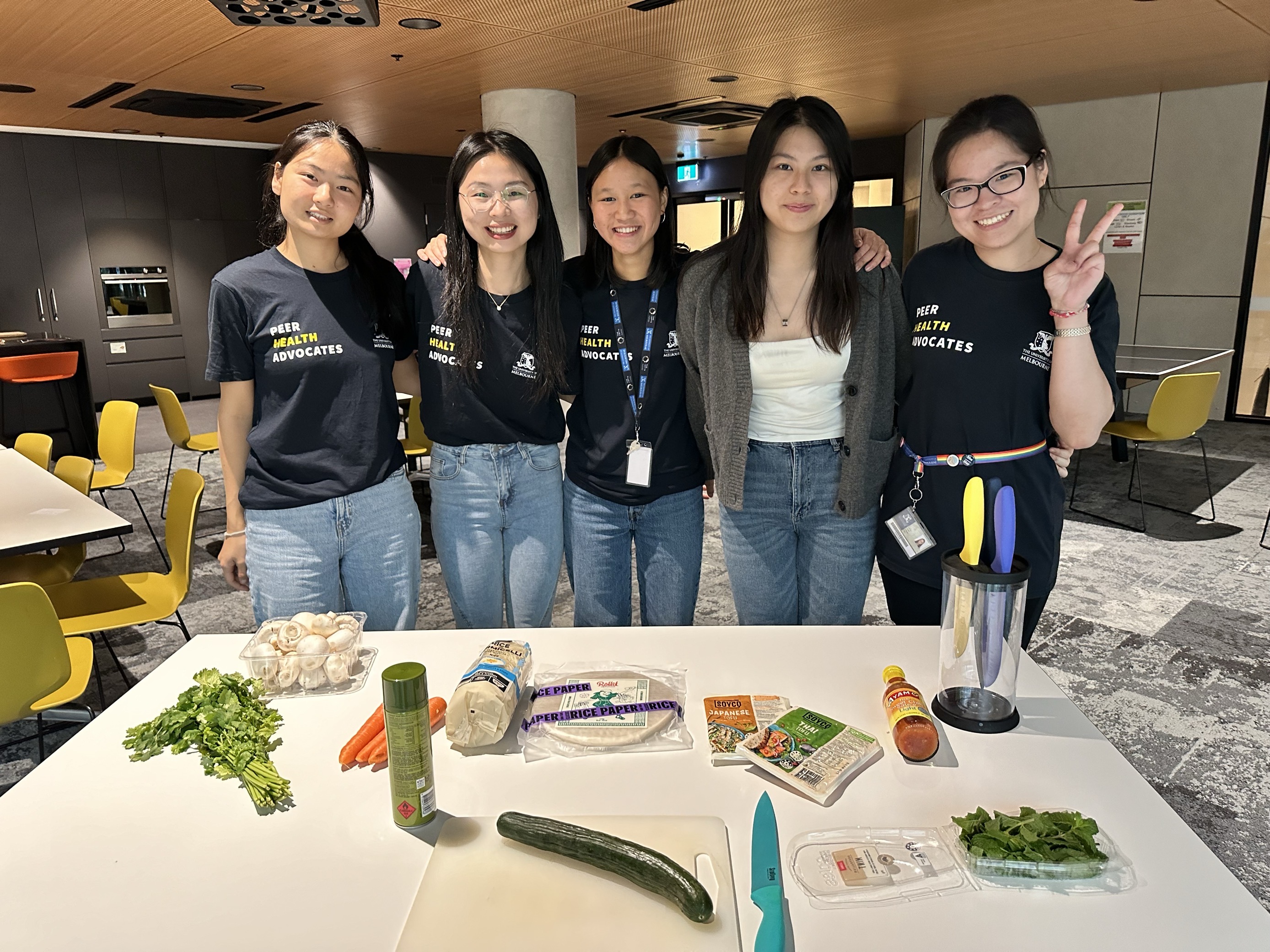
Our workshops focus on the principles of preparing quick, nutritious and budget-friendly meals. Come along, enjoy a delicious bite and meet new people! Book now.
-
Building resilience through wellbeing
We know that the semester is getting busier with assignments and deadlines. Take some time to look after yourself while supporting your friends.
About the Health Promotion Program
The University of Melbourne Health Promotion Program is here to improve and support your health and wellbeing. We do this by leading evidence-based campaigns and activities on campus, and raising awareness of the wellbeing support and services available to students at the University.
The Health Promotion Program’s vision is to promote holistic student wellbeing by running evidence-based and student-informed activities and campaigns across all University campuses. We are small team of staff and students who envision a health-promoting university that prioritises health and wellbeing as a prerequisite to study. Our mission centers around four pillars of health:
-
Building mental health and wellbeing across the student population.
-
Building safer experiences and practices among the student population with respect to sex, sexuality, relationships and sexual and reproductive health.
-
Improving equity of experience in nutrition, physical activity, food security and improve behaviours towards alcohol and other drugs across the student population.
-
Facilitating students’ awareness and knowledge about how equity, diversity and social justice shape health outcomes.
Why is health and wellbeing important?
There are many reasons for taking care of your health and wellbeing. Here’s some of what we know:
-
One in three students reported experiencing stressors during their time at university. These experiences contributed to poorer outcomes in mental wellbeing and academic performance, with one in five reporting a mental health disorder.
-
Domestic and international students both experienced increased risk of:
- Mental ill health
- Sexual harm
- Discrimination and bullying
- Financial stress
- Food security
- Stressors relating to academic commitments.
-
- Only 7 per cent of international and 13 per cent of domestic students had the recommended five servings of vegetables each day
- 43 per cent of international and 52 per cent of domestic students had the recommended servings of fruit each day.
-
- One in four domestic students and one in five international students did the recommended 30 minutes of moderate exercise on five or more days each week
- One third were an unhealthy weight.
-
- 61 per cent of domestic students reported hazardous alcohol use during the past year compared to 31 per cent of international students
- 25 per cent of domestic students reported illicit drug use during the past year compared to 6 per cent of international students.
-
43 per cent of students reported experiencing loneliness while at university.
Source: Sanci, Towards a Health Promoting University, 2020.
Programs and resources
-
Towards a vape-free campus
We’re partnering with VicHealth and others to reduce and prevent vaping harm among students.
-
Safer Sex Practices program
Order free safer sex products (male condoms, female condoms, lubricant and dental dams) and get them delivered to you discreetly.
-
Healthy Eating program
Improve your health through nutrition. Discover cooking workshops, recipes, meal prep tips and more!
-
International student sexual health
There’s a lot to consider as an international student – exploring a new campus, making new friends, and even dating and relationships. Find out about a range of sexual health and wellbeing topics, as well as how to access services and use the Australian healthcare system.
-
Green Spaces Map
Check out the Green Spaces Map to discover peaceful retreats and secret hideaways around Parkville campus. Unwind, take five and connect with nature.
-
Free HIV self-testing kits
As part of the CONNECT project, the University of Melbourne and Thorne Harbour Health have partnered to provide free HIV self-testing kits at Parkville campus. Learn more and find your nearest location.
Health Promotion Grant
Peer Health Advocates (PHAs)
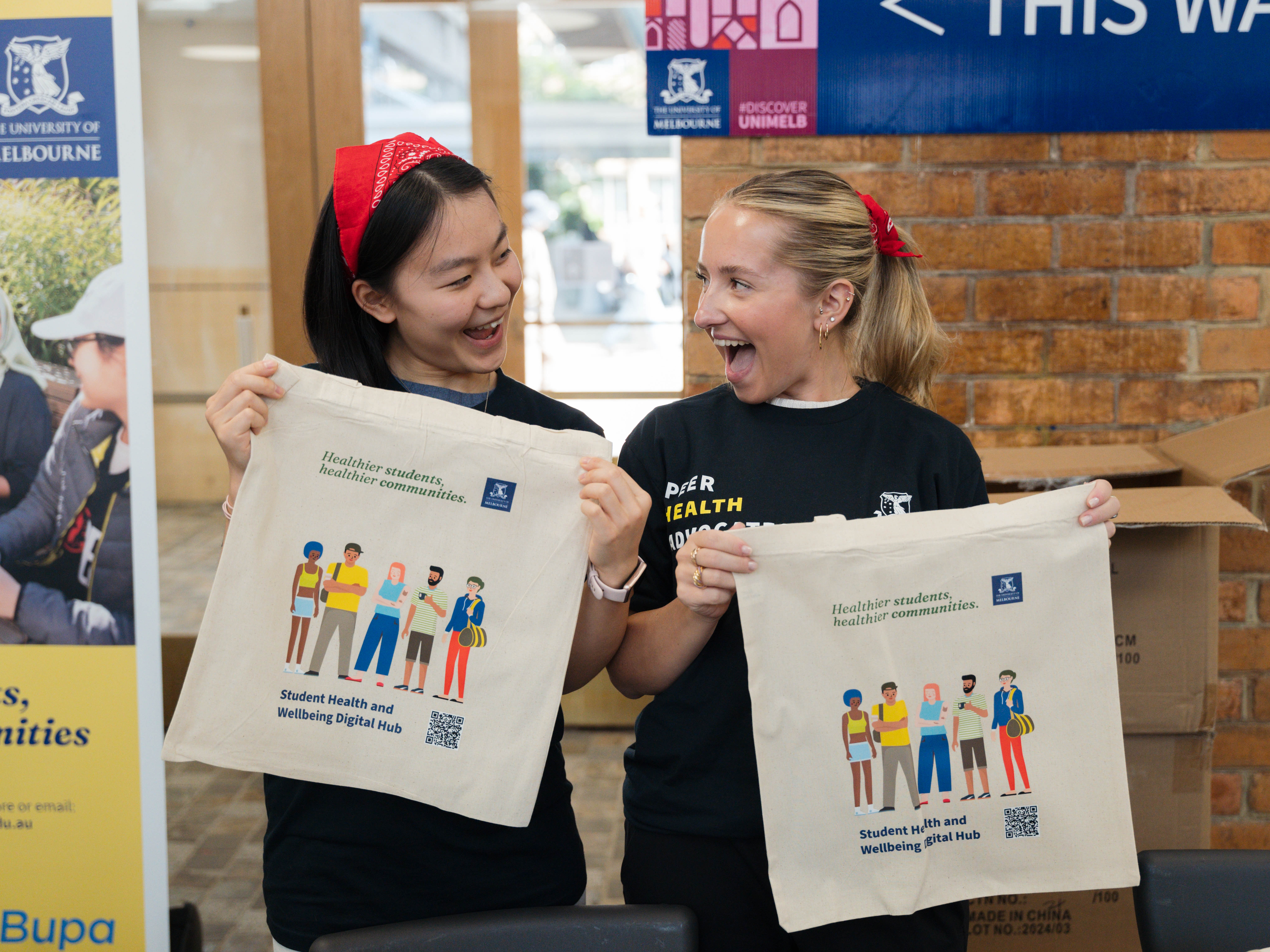
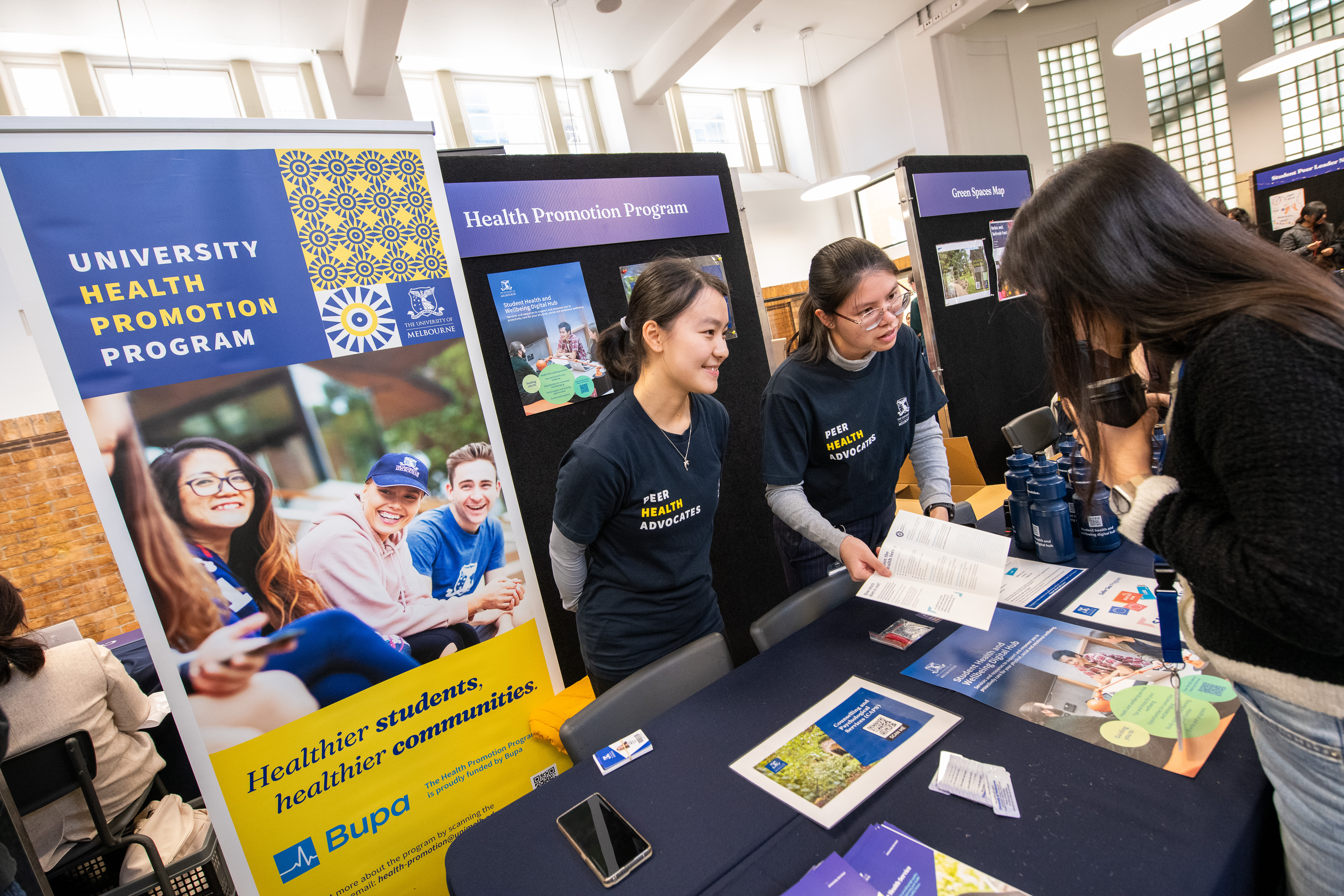
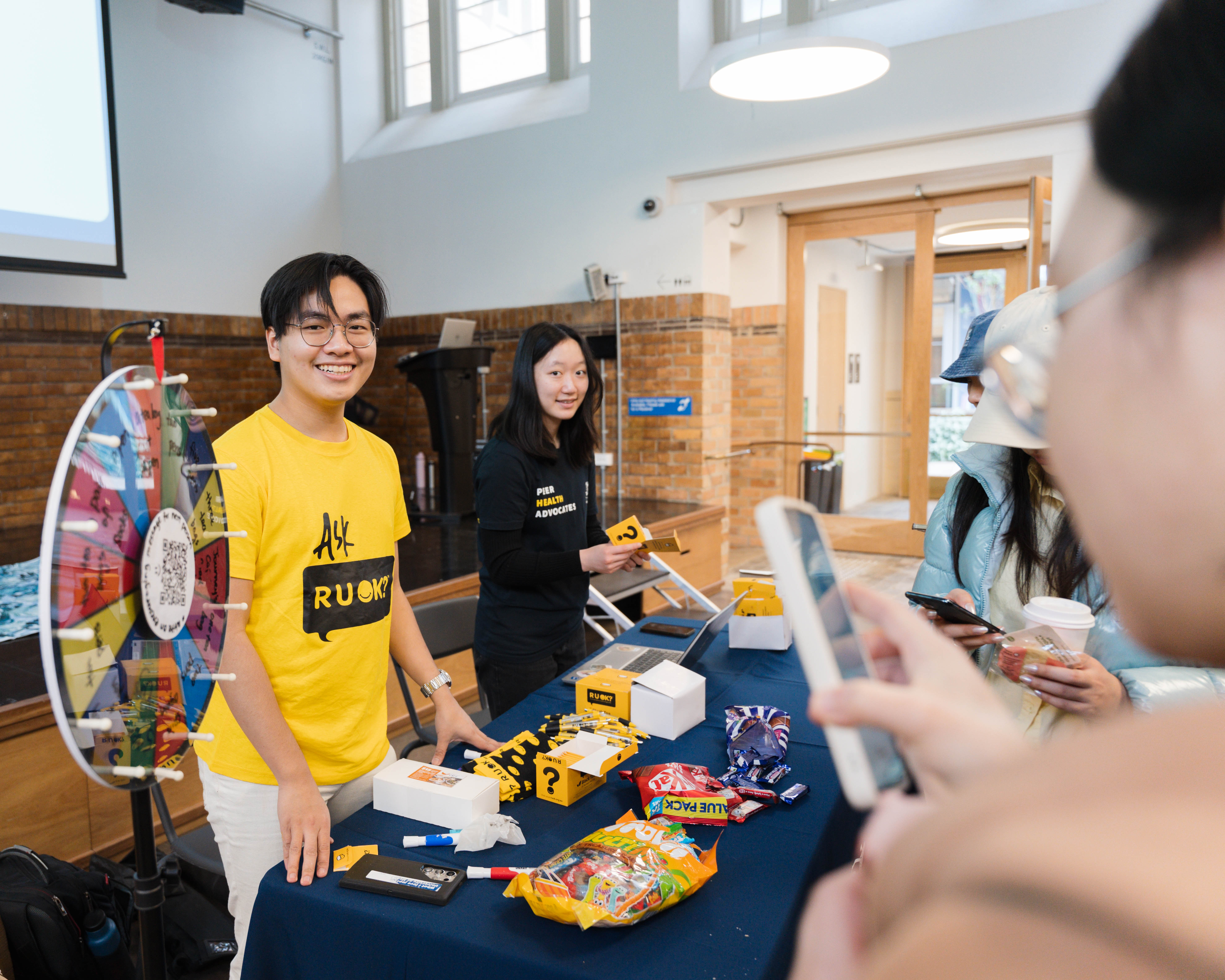
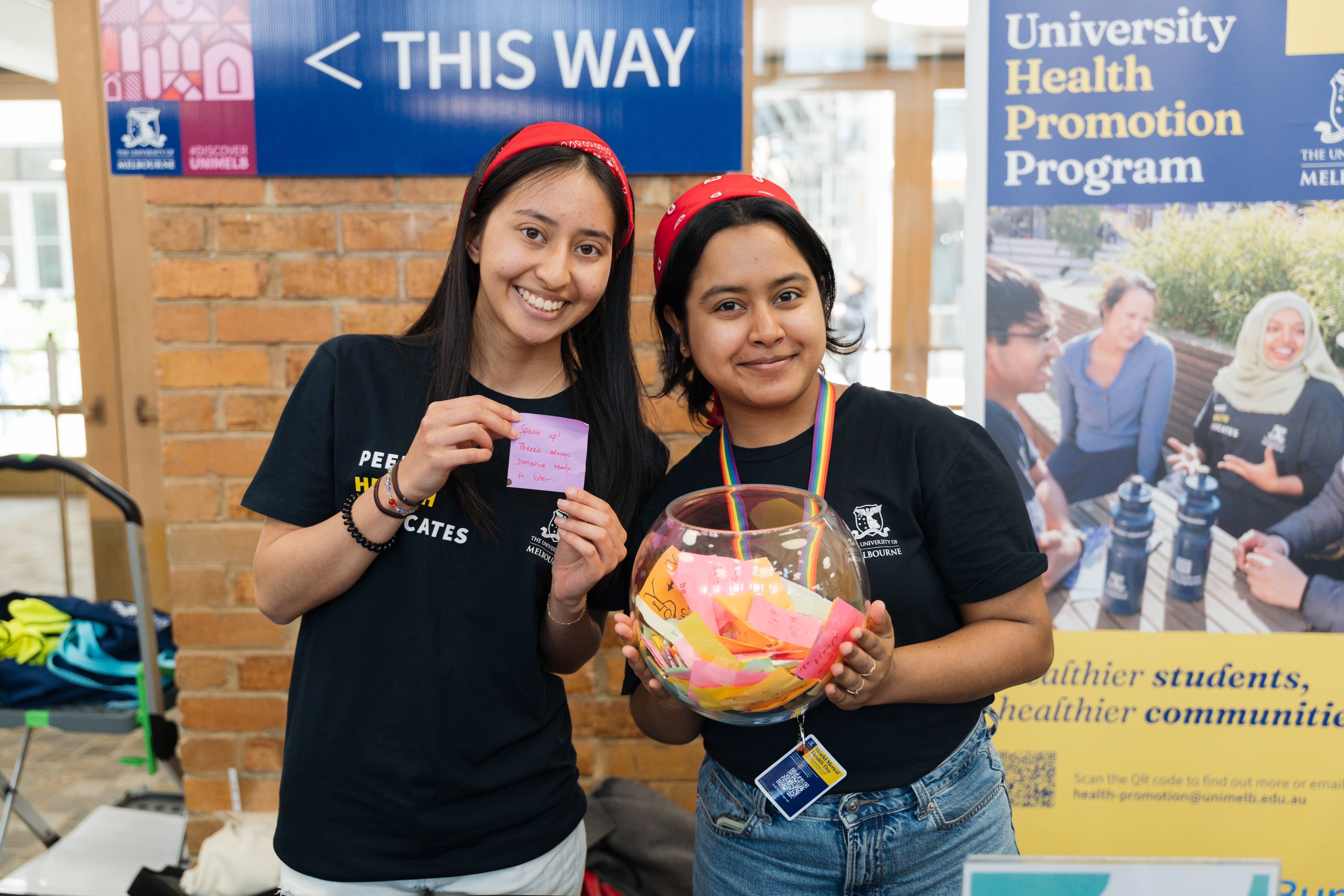
Peer Health Advocates (PHAs) are a group of friendly student volunteers from a variety of faculties, who share a passion for health and wellness. You'll catch our PHAs at a range of events and campaigns such as Melbourne Orientation, R U OK? Day, Mental Health Week, SWOTVAC Wellbeing and many more!
Become a PHA
Are you passionate about student wellbeing and healthy lifestyles? Interested in raising awareness about the health and wellbeing services on campus? Want to volunteer with a group of other amazing PHAs? Volunteer PHAs are recruited annually at the start of each calendar year.
Applications for the 2026 intake are now closed. Sign up to our mailing list to be notified when the 2027 intake opens.
As a PHA, you will have the opportunity to:
- Contribute to a healthier campus, community, and culture at the University in fun and engaging ways
- Raise awareness about the University's health and wellbeing services
- Gain access to a variety of free professional development opportunities and social activities
- Earn a Melbourne Plus Community Engagement digital credential
- Receive a $150 gift voucher upon role completion.
Meet our PHAs

Vivianne Phung
A special part of being a PHA is having the ability to participate in hands-on activities and being able to make a tangible impact on the student community. Whether it be speaking to students at a stall or making Safer Sex packs, understanding how my efforts translate to helping students motivates me to continue my work as a PHA!

Ka Weng Huo
I enjoyed the flexibility, and the huge variety of events provided in PHA program. It worked well to allow me to put effort into volunteering while coping with my busy academic schedule. It was fun and interesting, and it provided me with exposure to different individuals from diverse backgrounds.

Yiying Zhang
What I really enjoyed the most was the supportive and harmonious atmosphere. Everything felt genuine and comfortable. The program was also very well organised, so everything ran smoothly, and I always knew exactly what I needed to do. I also learnt a lot of useful skills, especially in management.

Emi Chen
It gave me a chance to connect with so many different people and actually make a positive impact on campus. The program has helped me grow in confidence and communication. It’s also made me more mindful of my own wellbeing. I’ve come away with a whole arsenal of knowledge about the support services available to UniMelb students.
Program Gallery
Carley
What motivated you to become a peer health advocate?
The PHAs are unique in the way that the team focuses on helping those closest to us, our own university community. This opportunity allowed me to take initiative and proactively help my peers to look after and embrace all aspects of their health and wellbeing.
What have you enjoyed the most about being a peer health advocate?
I love sharing this sense of joy with like-minded individuals and working together in building a healthier university community. Being a PHA has allowed me to learn about the complex and holistic view of healthy beings from a diverse group of passionate students.
What is your top health/wellbeing tip for students?
Be intentional when taking care of your mental and physical health! Try your best to take time out for yourself whether that be taking a nap, going on a walk or eating good food and remember it’s okay not to be okay :))
Celeste
What motivated you to become a peer health advocate?
Connecting with other lovely peers who are also passionate about promoting mental health and healthier lifestyles in the university community, as well as gaining hands-on experience volunteering in health campaigns and activities.
What have you enjoyed the most about being a peer health advocate?
Volunteering in various events, such as the Uni Mental Health Day, promoting the university health services to students, and meeting like-minded people from diverse backgrounds were some of my favourite moments!
What is your top health/wellbeing tip for students?
Growth at your own pace, focus on your own path and take your time ;)
Grace
What motivated you to become a Peer Health Advocate?
The state hospital system had just gone into a code brown due to COVID-19. It felt imperative to be part of a communal health response, in whatever way I could, within my own sphere of influence. As serendipity would have it, I logged in to my Student Portal and saw the position open – I applied right away!
What have you enjoyed the most about being a Peer Health Advocate?
Honestly – filling envelopes full of various safer sex materials for distribution to students. There is something satisfying about the practical. Whether it’s cooking for a student breakfast or having a conversation that helps someone access the support they’re seeking. You feel part of something useful.
What is your top health/wellbeing tip for students?
As a student you are part of a university community which means there are so many resources – many free, or subsidised – that exist to support your health and well-being (physical, mental, social, emotional, and academic). If you’re not sure where to start, ask a PHA – we’re literally here to help.
Manas
What motivated you to become a Peer Health Advocate?
Going through the first year of my undergraduate degree was pretty unusual with the pandemic and opportunities to meet new people were reduced. I felt the program would equip me with opportunities and information necessary to distribute support structures to those who need them.
What have you enjoyed the most about being a Peer Health Advocate?
The Health Promotion Program is a great developmental experience. Being able to talk and discuss with like-minded individuals with differing backgrounds helps broaden my horizons and teach me of new ways to aid student communities. It's also invaluable for developing social and organisational skills.
What is your top health/well-being tip for students?
Build new friendships and connections. Having someone to talk to, whether that be sharing struggles in a subject or when having lunch, has been an incredible boon to both my mental health and student life. If there was one tip I had to give, it would definitely be to expand your circle!
Priyasha
What motivated you to become a peer health advocate?
I have been passionate about health and wellbeing equality and equity from a young age. The opportunity to work with the university's Health Promotion Program was thus a perfect fit for me. I got to do all of my favourite things including socialising and advocacy and helping run fun events for people and be part of a wonderful cause at the very same time.
What have you enjoyed the most about being a peer health advocate?
Becoming a PHA was an opportunity I came across in a complete stroke of luck. However, from the day of my first meeting with the team I knew I was in the right place. I have loved the experiences of being able to speak to and get to know so many people sharing the same motivations of spreading awareness about health and wellness and the services that the university provides for the student community.
What is your top health/wellbeing tip for students?
Self-care is very underrated. Being a university student, especially if you're not from this city and have moved homes for your education, can be a very overwhelming experience. You are making new connections, transitioning to a new phase of your life and balancing academics all together. Taking time out for spending with oneself can be the one thing we need above all and be the lifesaver we all need.
Remi
What motivated you to become a Peer Health Advocate?
I was motivated to become a PHA to get more experience working with others to achieve health-related goals in a well-organised and regulated way. As a biomed student, I try to get as much exposure to all aspects of health and wellbeing so that I can integrate all that I’ve learnt when I’m finally working in the healthcare system.
What have you enjoyed the most about being a Peer Health Advocate?
I have loved the sense of connection that I’ve gotten with the other PHAs, as well as with all the other students I’ve engaged with during PHA-run events. It’s been so great to see everyone’s smiling faces and to meet such wonderful people!
What is your top health/wellbeing tip for students?
My top tip for students is to resist becoming rigidly stuck in ways of operating that are not working. If you aren’t happy, or things aren’t going well for you, remove yourself from that situation of harmful familiarity to find what does work. Remember: you don’t have to do it alone.
Leanne
What motivated you to become a peer health advocate?
As an experienced (and loyal) University of Melbourne Student, I have been through all the stresses of university life and really wanted to help other students, through a health promotion lens, live their university lives to their fullest capacity. The University has so many services and opportunities, which can be quite overwhelming to navigate, and I wanted to help point students in the right direction.
What have you enjoyed the most about being a peer health advocate?
I’ve enjoyed being part of the uplifting PHA community and making connections with students outside of my course. The freebies are fun too, but I will always remember how welcomed and supported I felt being a PHA.
What is your top health/wellbeing tip for students?
Get at least 30 minutes of sunshine (or light) as soon as you wake up. It will help you sleep better at night and give you your daily dose of vitamin D for maximum calcium absorption (i.e. happy and healthy bones)!
Julia
What motivated you to become a peer health advocate?
I wanted to be part of my university community and help other students feel supported – and what better way to do that than putting on fun events related to health and wellbeing?
What have you enjoyed the most about being a peer health advocate?
Making new friends of course!
What is your top health/wellbeing tip for students?
Prioritise your health – because even when you think that you don't have the 'time' or 'energy' for it – the healthy version of you can help you manage every other aspect of your life.
Elizabeth (Liz)
What motivated you to become a peer health advocate?
I’ve always been passionate about women’s health and I want to spread awareness, and joy, to those in the UniMelb community!
What have you enjoyed the most about being a peer health advocate?
Meeting friends from different backgrounds, as well as participating in events where I am able to learn new things in a cause I’m passionate about.
What is your top health/wellbeing tip for students?
Have a 'You' day where you reset your bedroom, take a walk in a pretty place, listen to music and eat your favourite dessert.
Contact us
You can contact us at health-promotion@unimelb.edu.au.
Looking for something else?
Check out our student services directory, which lists our comprehensive network of support services.
Support for Students Policy
The University of Melbourne is committed to providing our students with the support and resources required to assist them to be successful in their studies.